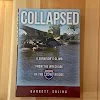
I’m probably the worst amateur driving instructor in the world. At least, that’s what my family would probably tell you. And they’re not wrong. Nearly 20 years ago I was in a horrific car accident when an interstate bridge I was driving across collapsed. The trauma still lives inside me, and it feels like it is imprinted in my bones, my muscles, and my breath.
Most of the time it lies there dormant; but when a trigger comes along unexpectedly, the anger can explode out of me and onto everyone near my perimeter. To the outsider, it can seem like after almost two decades I have learned nothing in my post-traumatic journey. That’s how strong my reaction can be.
So put me—someone triggered by a trauma that happened in a vehicle —into a car with a student driver bound to encounter some lip-biting situations—and you can imagine the result. I have not one, but two people in my household learning to drive, and I’m the one around who can teach them. Unfortunately, I react poorly in situations that I can’t control as my brain connects out-of-my-control situations with danger. My fight/flight/freeze reaction automatically kicks in when the student driver accidentally crosses over the center stripe or misses a yield sign. I yell. I reprimand. I leave the target of my trigger left feeling frustrated, upset, confused, and blamed. I can see it in their expression. That’s when I know I’ve erred with my response. But it’s too late. The damage has been done.
I blame the trigger, but the recipient of my response doesn’t see it that way. They see me blaming THEM. They see my response as disproportionate to the act (and they’d be correct). They’d rather be anywhere but with me in that moment. They file the interaction away and wonder if the next encounter with me is going to result in another dust-up. They wonder if getting together again is worth it.
And that’s what gets me most. Every poor response I have digs the hole a little deeper. It’s so frustrating. Why do the triggers override my circuitry even when I know what they’re doing and how I should react?
If it’s difficult for me at times, I can imagine what it’s like for someone on a post-trauma journey who doesn’t understand how triggers affect them.
It’s a daily struggle, but not an impossible one. If only there’s enough time to self-correct before the student driver finally decides to drive away forever.