
Unit 3: Mastering Trauma
IN THIS LESSON
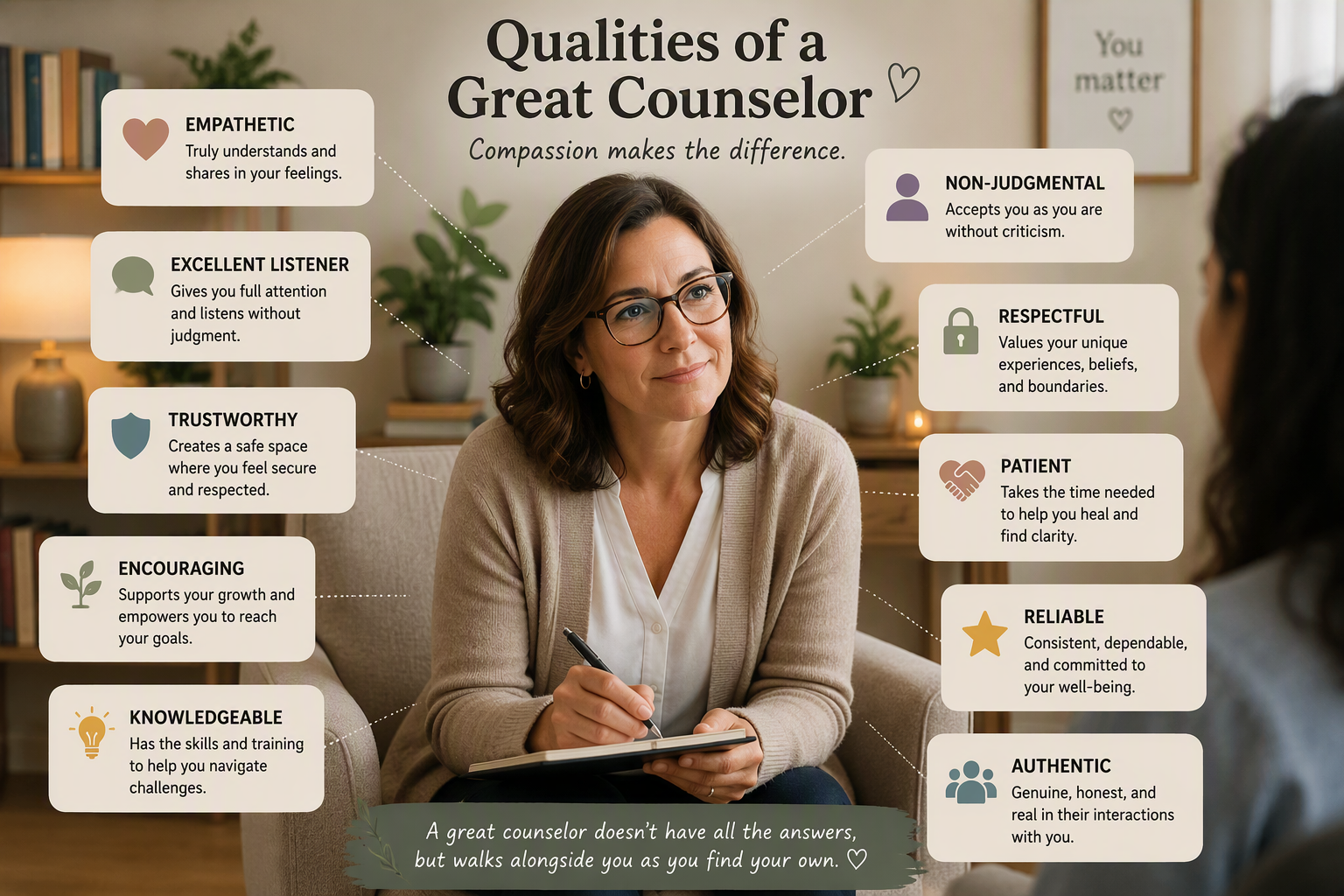
Professional counselors should exhibit several qualities.
When searching for a therapist, be sure to ask candidates lots of questions to help ensure a good fit.
If you’ve never seen a professional counselor, you might wonder what to look for. Ultimately, you should find a therapist you feel comfortable with and trust.
That being said, there are some essential qualities you should be on the hunt for.
They should be trauma-informed: Ask your potential therapist if they’ve had any trauma-specific training. Those who have understand how trauma affects the mind and the body. They also should be familiar with the modalities mentioned previously.
They have empathy and withhold judgement. The are active listeners and will validate your experience. You should feel safe with them.
They prioritize trust-building and rapport. You want your therapist to feel like your partner.
They use grounding and containment strategies to prevent re-traumatization.
They respect you for who you are: your race or ethnicity, your sexuality, your religion, etc.
They set and maintain clear boundaries.
They adapt their methods to your needs and your pace. You shouldn’t feel pushed in your recovery.
Looking for the right therapist is a worthwhile investment of time. We’re talking about your future well-being and recovery! You may need to “shop around” for that person. Many people don’t stick with the first counselor they meet.
Asking a lot of questions can help you hone in on the right person for you. Microsoft Copilot provided me an interview checklist for trauma therapists.
If you’re shopping for a therapist, consider asking these questions:
How do you create a safe environment for clients who’ve experienced trauma?
What steps do you take to prevent re-traumatization during sessions?
How do you handle pacing if I feel overwhelmed?
What trauma-specific training or certifications do you have (e.g., EMDR, Somatic Experiencing, DBT)?
Which therapeutic modalities do you use most often with trauma survivors?
How do you decide which approach is right for each client?
How do you involve clients in setting goals for therapy?
What’s your philosophy on client autonomy and empowerment?
How do you balance guiding me with letting me lead my own healing journey?
How do you ensure your practice is inclusive of diverse identities and backgrounds?
Can you share how you adapt your approach to different cultural or personal contexts?
What is your availability and typical session length?
Do you offer crisis support between sessions?
How do you measure progress in trauma recovery?
The right therapist should make you feel safe, heard, and empowered, while offering trauma-informed expertise that meets your needs.
Time to Reflect
Question 1: What qualities would you look for in a therapist other than those mentioned above?
Question 2: What questions not listed above would you ask a therapist during an interview?