
Unit 2: Managing Trauma
IN THIS LESSON
Create a plan so you have a go-to when a trigger arrives unexpectedly.
Look for ways to ground yourself before a trigger happens.
If you’re new to this whole “managing my trauma triggers” thing, then it’s likely that when a trauma trigger occurs, you won’t be prepared for it.
It happens like a lightning bolt striking down from a cloudless sky. So, what can you do to avoid getting caught off-guard?
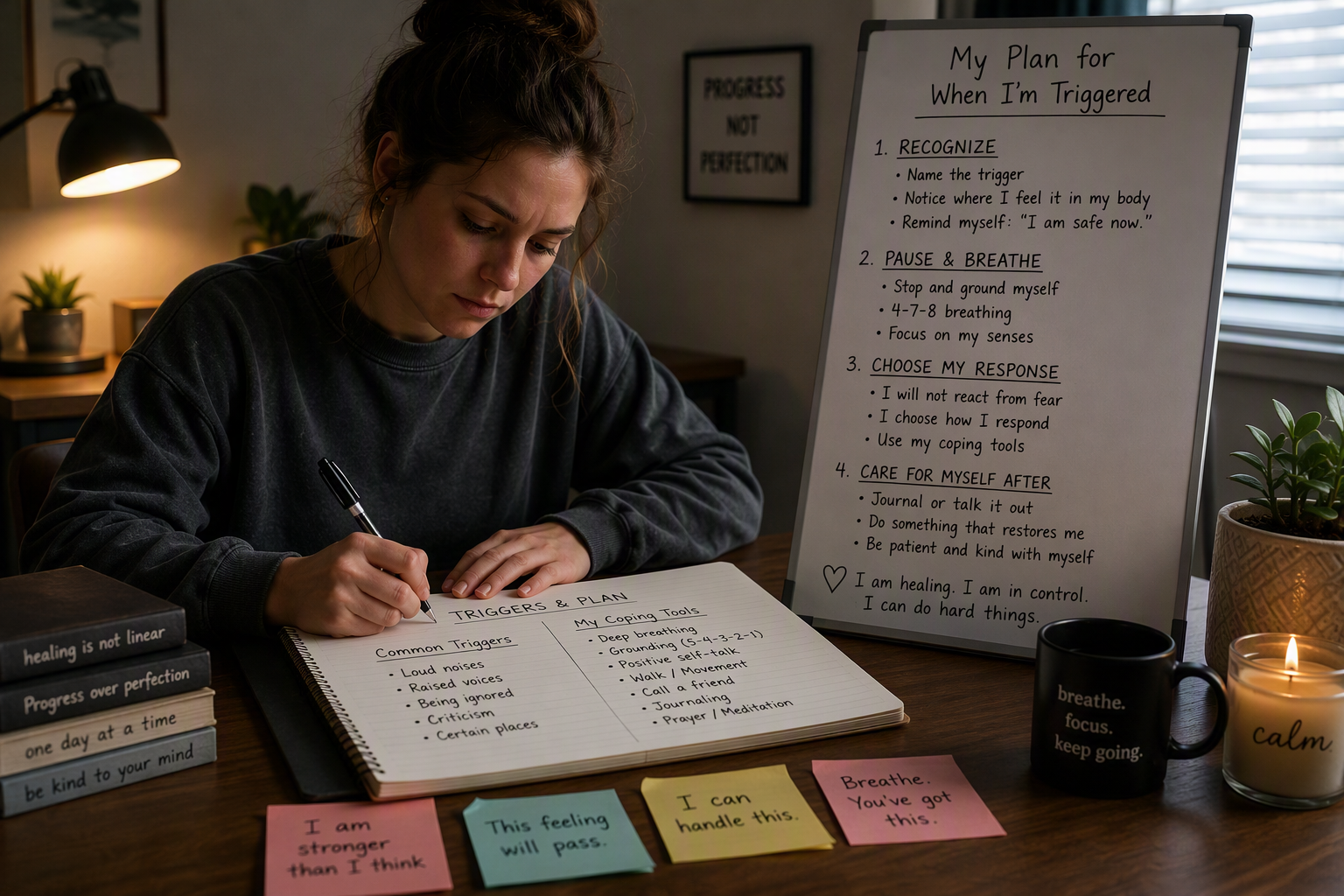
Creating a plan before a trigger pounces can arm you with what you need to successfully fight back. Here are three components to a successful plan:
Identify those situations, sensations, or thoughts that you know create a ripe environment for triggers. For example, if you know that feeling overwhelmed can trigger you, then you’ll be in a better position to address that trigger type when you notice yourself in such a situation.
Find “grounding items” that you can lean on to calm you during the onset of a trigger. That could be a music playlist, a collection of photos or videos on your smartphone, a blanket, or a scented candle.
Have a way to get away. Give yourself permission to remove yourself from a situation. Step away, take a walk, or just move to a different room. A change of scenery can give you room to breathe and relax.
By having a plan in place, you put yourself in a better position to respond to the trigger in a healthy and safe way.
Time to Reflect
Question 1: What situations, sensations, or thoughts are you aware of that you know leave you vulnerable to a trigger?
Question 2: What items do you own that you could rely on to help ground yourself when you’re triggered?