
Unit 3: Mastering Trauma
IN THIS LESSON
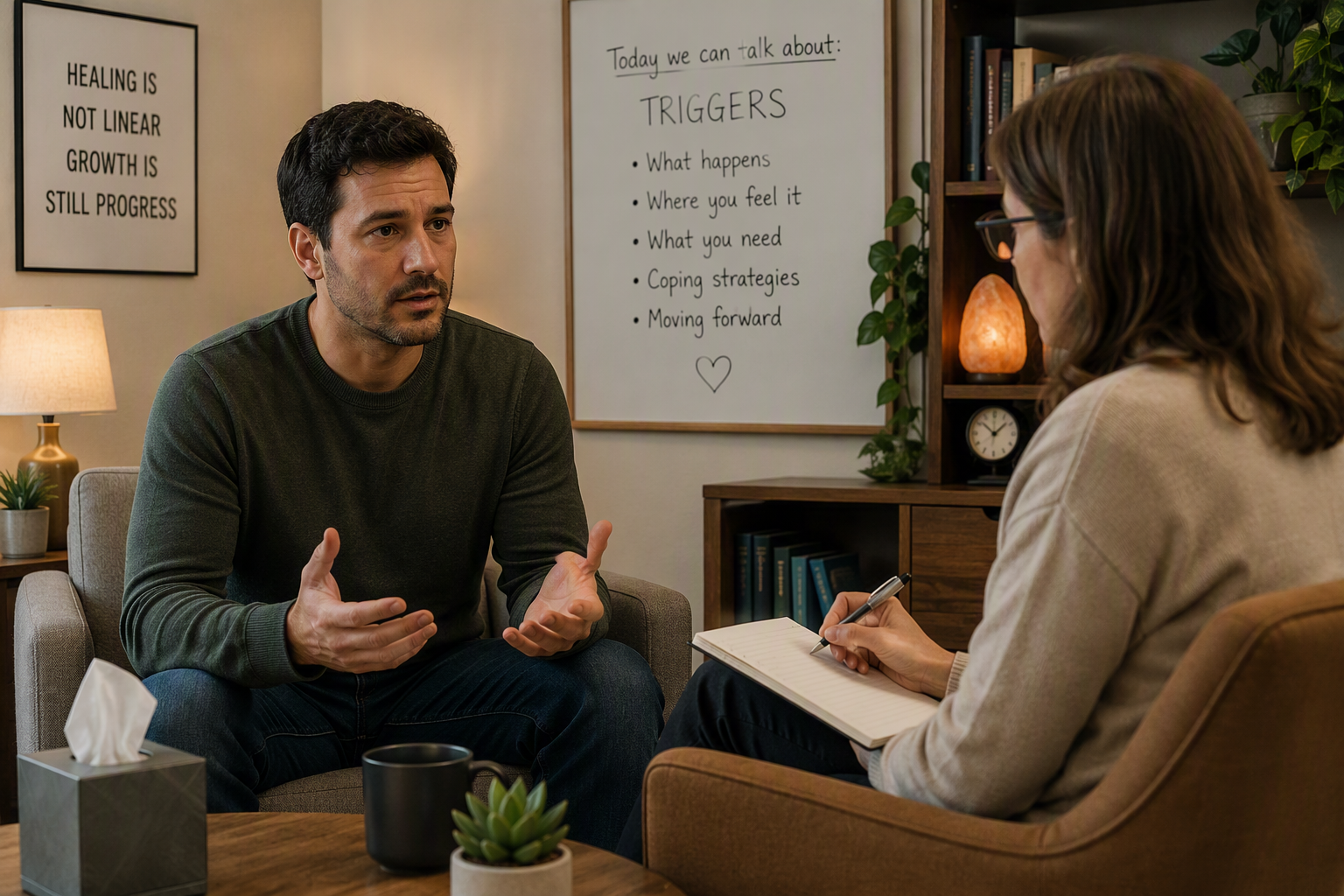
Professional counselors offer several benefits to trauma survivors.
Counselors themselves have a toolbox of therapy techniques to help guide patients.
This guidebook isn’t meant to be an end-all be-all for recovery. Rather, it’s meant to outlay a path to help you move forward post-trauma.
While I haven’t discussed professional counseling in detail, it should play a central role in your recovery.
Why? Counseling provides a safe space, proven tools, and continued expert guidance.
When climbers scale Mount Everest, they don’t do it alone—a guide accompanies them. This invaluable person provides insight and experience that the climber doesn’t have. They make the unmanageable seem manageable. A professional counselor plays a similar role.
So what do counselors do?
They create a safe and supportive environment as they prioritize emotional safety, trust, and empowerment.
They guide trauma survivors through structured reflection to help them interpret what they feel.
They teach their clients how to manage triggers, deal with anxiety, and regulate their emotions.
They help survivors reclaim their identity.
They encourage exploration of values, strengths, and abilities.
They foster self-trust and confidence.
Professional counselors may use different therapies to help patients process traumatic events. These can include Cognitive Behavioral Therapy (CBT), Dialectical Behavior Therapy (DBT), Eye Movement Desensitization and Reprocessing (EMDR), and Somatic therapy.
Personally, I have had great success with EMDR and endorse its use. Here’s a description of each:
CBT: Cognitive Behavioral Therapy focuses on changing negative thought patterns and behaviors by identifying and changing cognitive distortions and learning new coping skills.
DBT: Dialectical Behavior Therapy focuses on emotional regulation, mindfulness, and interpersonal effectiveness. Its structured approach can be effective for intense emotions and self-destructive behaviors.
EMDR: Eye Movement Desensitization and Reprocessing focuses on processing traumatic memories using bilateral stimulation. It uses eye movements and tapping to reprocess memories.
Somatic therapy: This focuses on the mind-body connection to release trauma stored in the body. It does so by identifying and changing cognitive distortions and teaching new coping skills.
Professional counseling isn’t just helpful; it’s a foundational component of recovery. You wouldn’t climb Mount Everest alone; don’t attempt to summit your trauma without professional guidance either.
Time to Reflect
Question 1: Why might some people feel hesitant to visit a professional counselor?
Question 2: Think of something you’ve done that required a coach. What did you learn from that person and the experience in general?