
Unit 2: Managing Trauma
IN THIS LESSON
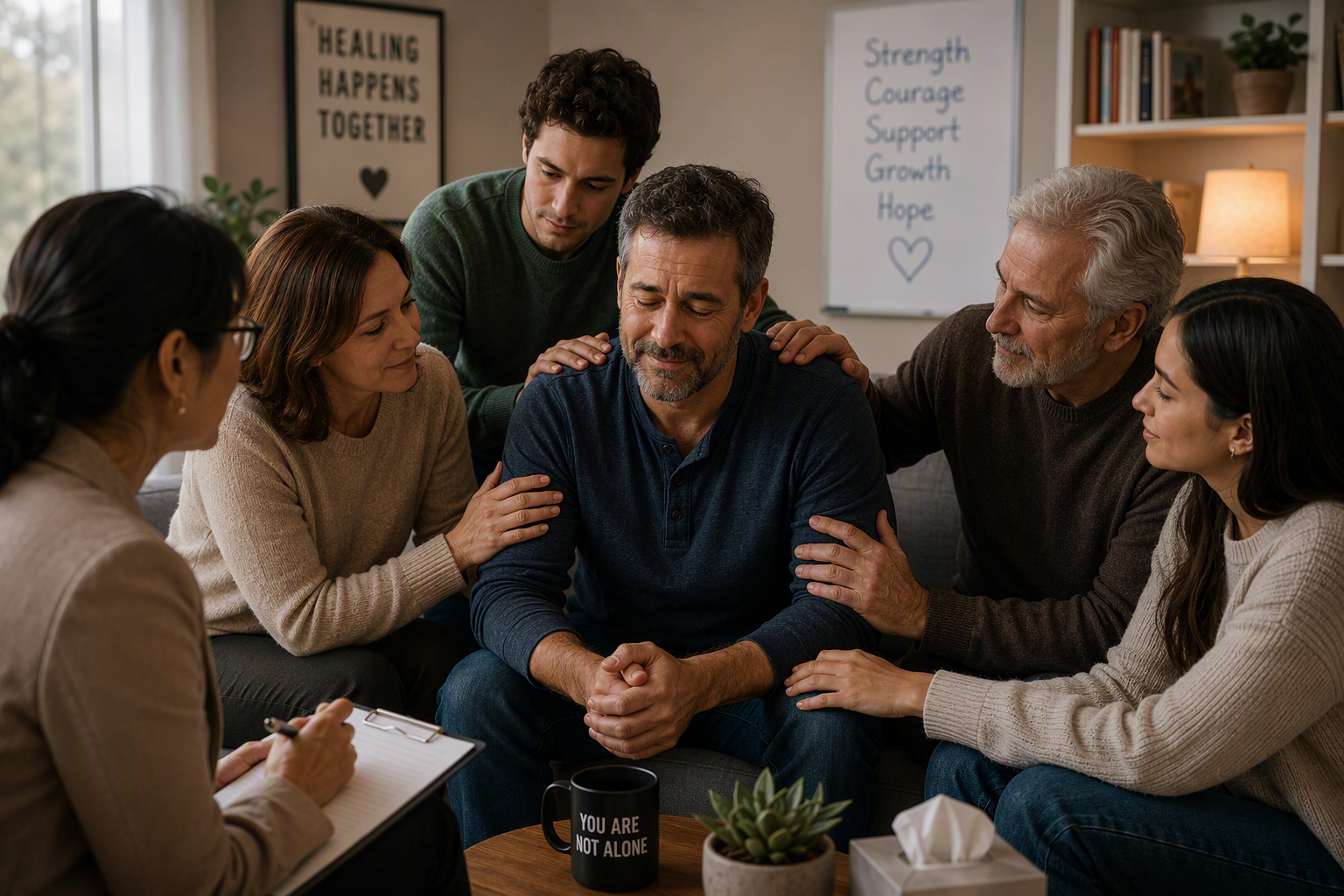
Support systems provide a host of benefits, including safety, validation, and encouragement.
You might find that the value of support systems changes over time; you might lean on them more at certain times, or you might discover one type of support system bears more fruit for you.
“I get by with a little help from my friends.” Yes, the Beatles were certainly an influential rock band. And maybe they knew a little something about trauma recovery!
Support networks are hugely beneficial because of what they provide: safety, validation, and encouragement. Each of these nurture recovery.
There are different types of support systems: professional support, personal relationships, peer and community support, and organizational and online resources. They all serve a purpose and can help accelerate trauma survivors’ healing. Like the tools we’ve mentioned so far, there’s no one-size-fits-all approach. You might find some types of support are more effective for you than others. The only way to know is to try them.
For me, I’ve sampled from each during my recovery journey. Here’s what I learned: Each benefitted me to some degree; however, their level of effectiveness increased or decreased at different times.
You may find that in one stage of your journey that peer support didn’t bear much fruit for you but then later you got more out of it. Remember, the recovery journey isn’t a smooth line that only moves up and to the right.
Professional support includes therapists/counselors with specialties like EMDR or CBT); psychiatrists who can provide medical support for trauma-related conditions; or social workers.
Personal relationships include family and friends, partners, close friends, or mentors.
Peer and community support exists in the form of support groups, community center programs, or faith-based groups.
Organizational and online resources can include nonprofits and advocacy groups, online communities like Facebook groups, Reddit, or chat threads, and educational resources like blogs, podcasts, and trauma recovery-related websites.
Support systems hold value for a few reasons. They can help pull us out of isolation, show us that we have shared experiences, provide encouragement, and give us safe spaces. They are foundational and complement the personal recovery healing we do privately.
Time to Reflect
Question 1: When we think of professional support, a therapist or counselor immediately comes to mind. From the list, what support systems are available to you locally that you hadn’t considered until now?
Question 2: What do you do (or what can you do) when you find your recovery has plateaued or is receding?